


Let us know that you approve our cookie policy.
We use our own and third-party cookies to optimize your property searching experience on our website. If you continue, we assume that you agree with our use of cookies.


Global travel patterns often shift when geopolitical tensions rise, and these days the recent developments in the Persian Gulf region are beginning to influence how tourists plan their holidays. These days, observers are noticing new tourism trends in Turkey vs Middle East, as more travelers consider Turkey instead of Middle Eastern destinations.
From historic cities to Mediterranean beach destinations, Turkey already attracts millions of visitors each year yet, thanks to new arrivals, some tour operators report that European tourists who initially considered destinations in the Gulf are now exploring alternatives across the Mediterranean. As a result, analysts suggest that the country’s tourism sector could see renewed momentum if these trends continue.
However, the situation is complex and should not be viewed as a simple shift from one destination to another. Countries such as the United Arab Emirates, particularly Dubai, remain major global tourism hubs with strong international demand and well-developed hospitality sectors. Instead, the current changes reflect additional adjustments in traveler sentiment as visitors prioritize flexibility, safety perceptions, and proximity when planning their vacations. So, while the Persian Gulf region still attracts global tourists and investors, the regional tensions’ impact on tourism can be clearly seen as some tourists tend to react quickly to geopolitical developments.
 There are, of course, several factors that explain why tourists choose Turkey when evaluating their options.
Let’s take tourism as an example. It is highly sensitive to perceptions of stability. Even when major tourist centers remain unaffected, travelers often prefer destinations they perceive as less exposed to potential disruptions. In this environment, Turkey benefits from its geographical position and its long-standing role as a gateway between Europe and Asia. For many European tourists, Turkey is among the best places for both living and holidays. It offers shorter flight times compared to long-haul destinations in the Gulf. This makes it easier to adapt travel plans quickly, especially for summer holidays or short seasonal breaks.
Cost considerations also play a role in destination choice. Turkey has historically provided strong value for travelers due to competitive accommodation prices, diverse hotel options, and a wide range of tourism services. As inflation affects travel budgets across Europe, this balance between affordability and quality becomes increasingly attractive. In addition, the fact that visitors can explore a diverse cultural heritage also affects the situation. They can enjoy seaside resorts along the Mediterranean coast, or experience nature tourism in various regions.
Therefore, Turkey is becoming a popular tourist destination with its established tourism infrastructure, diverse holiday experiences, and safer travel environment.
 International tour companies are stating that travelers who initially considered Gulf destinations are increasingly requesting alternatives within the Mediterranean region these days. Some industry representatives report that demand has already started to increase for certain destinations, particularly major cultural centers and established coastal resorts.
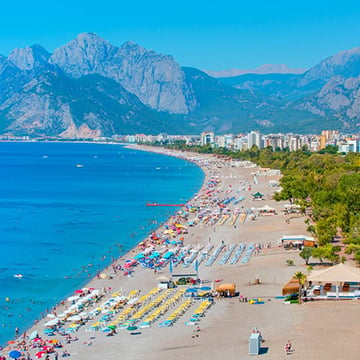
In the early stages of this shift, interest appeared to be rising in Istanbul since its airports provide direct connections to major European capitals. But then the attention has extended toward the country’s well-known resort regions along the western and southern coasts such as Antalya and Muğla.
The international tourism professionals often highlight Antalya as a destination capable of absorbing sudden increases in visitor numbers. The city has extensive hotel capacity, modern airports, and well-organized tourism infrastructure. These factors allow the area to respond quickly when global travel patterns shift.
On the other hand, Muğla is particularly popular with its resort town of Bodrum. Compared to large resort destinations, Bodrum offers a slightly different tourism experience. Visitors often choose the area for its marinas, boutique hotels, upscale restaurants, and relaxed coastal lifestyle.
Although the global tourism landscape is always changing, this country’s ability to adapt remains the same and it is one of its strongest reasons to buy property in Turkey. It has decades of experience hosting international visitors, and its tourism sector has repeatedly demonstrated resilience during periods of uncertainty.
 From an investment perspective, many investors have turned to the Gulf due to tax advantages, residency opportunities, and high rental yields. But industry observers note that due to the effects of war and fear-driven migration, the domestic and foreign investors choosing the United Arab Emirates in recent years may return to the Turkish real estate market. In other words, there might be a tourism shift to Turkey and investors could benefit from it. Additionally, it is also predicted that there will be a decrease in the number of tourists visiting Turkey from Iran and the UAE.
Furthermore, the Middle East tensions’ tourism impact is prompting investors to diversify their portfolios. Instead of focusing on a single international destination, buyers may consider multiple locations across Europe and the Mediterranean.
In short, based on data showing European tourists shifting to Turkey, experts believe that the county could benefit from these current adjustments in travel patterns. However, this does not mean other popular destinations are losing visitors. Global tourism demand continues to grow, but major hubs across the Middle East, Europe, and Asia are likely to remain important players in the industry.